Showing posts sorted by date for query le mazel. Sort by relevance Show all posts

Friday, September 26, 2008

Why I Started Chasing Bad Girls, #7 (Ninon de Lenclos)

I was a French major in college and lived in France for two years when I was in my twenties. Now that I’m talking with Le Mazel’s guests and neighbors and dealing with bureaucrats at the post office, I’m seeing the re-emergence of the French-speaking side of my personality—the one I had forgotten when I was in New York in my thirties, swallowed up in the pursuit of a career as a journalist and the search for a suitable husband.

French people really do know how to enjoy life, it’s true. I’m certainly enjoying life more now. Every morning is fine when you don’t have to go to a job but can just spend a couple of hours eating breakfast and reading on a sunny terrace visited by fat bumblebees and butterflies. We also have a nighttime terrace where we eat snails and look at stars.

My spiritual guide during this time is Ninon de Lenclos, a 17th-century Parisian courtesan who was known for running a school of love and giving great dinner parties. Her salons at the Hotel Sagonne on the rue des Tournelles gave rise to the myth of Ninon as an enchantress, and she chose her salon guests with as much care as she chose her lovers. Some were both, of course, including Louis II de Bourbon, the Marquis de Sévigné and his son, and the Comte Gaspard de Coligny. The Comte’s wife also was a salon guest as were playwrights Jean Racine and Molière, poet Bernard de Fontenelle, painter Nicolas Mignard (who used Ninon as one of his models), writer Jean de la Fontaine and cleric François le Métel de Boisrobert. Yes, a cleric. Ninon didn’t discriminate against theologians—arguing with them amused her.
I gain strength from Ninon, a classic bad girl who never married and lived to a ripe old age pleasing herself with no apologies. She was a devoted friend, but her lovers came and went. People said she had three classes of admirers: payers, martyrs and favorites. She's still revered in France for being a brainy sexpot from the time of the Bourbon kings who wrote witty little maxims such as: “A sensible woman will consult her reason before she takes a husband, but her heart when she takes a lover.”

As for me, my summer at Le Mazel is starting to feel like my summer of love—a sometimes disastrous summer of love, but my summer of love just the same. I’ve passed the six-month mark of running away from my husband, and my hormones are starting to kick into overdrive. I need a boyfriend, and now I’m asking myself, “What would Ninon do?”

On one special weekend in late June, Denise, a techno deejay and Kent's office manager, visits us from London. During all the fun, wine and music, I start to notice Erik more and more, the only boy out there on the terrace, so his maleness is imprinted on me and I fall in love with him. Oops.

Of an evening, Erik would rather sweep the kitchen floor, dry the dishes I’ve washed, and chat amiably about intentional communities and how he and the young wife he hasn’t met yet are going to raise their someday children amidst organic goats and chickens in the European countryside. This pleasant conversing is nice, and helps me remember how nice men can be, unlike my mad drunk of a soon-to-be ex-husband. But it’s not enough.

I try to be like Ninon and just think of Erik as one of the many available, sexy men in my life. Lalala. Bella’s French boyfriend, Jean-Michel, advises me to sneak into the young Texan’s bedroom one night and jump his bones, confident courtesan-style, but I just can’t do it.

I can’t do it, Ninon or no Ninon. But that summer I also meet Nigel, one of Kent’s friends from the London music scene, and we go out together—once. It’s lovely because it’s the first time I’ve had been kissed since I ran away from Jack, but it’s also a mistake because now Nigel’s maleness has imprinted itself on me, and I can’t get him out of my head, even though he’s gone back to London. What would Ninon do? What would Ninon do?

“Bella,” I say. “I’m thinking about going down to the pay phone in Banne and calling Nigel in London.”

“Are you sure that’s such a good idea, Joyce? I mean, technically speaking, Nigel was a one-time fling.”

“Huh? One-time fling? We had a real connection. Anyway, I wasn’t just snogging Nigel. I was romancing myself, like Kent says I should do. It’s got nothing to do with Nigel. I’m just like Ninon de Lenclos. I’m empowered. I choose my own lovers.”

“Ninon de Lenclos was a prostitute, Joyce.”

“She was a courtesan! There’s a big difference.”

“You’re really under the influence, aren’t you?”

Sigh. Silence. Some summer of love this is turning out to be. Maybe it’s time for me to forget about these boys and start looking for a new bad girl.

Tuesday, September 16, 2008

Why I Started Chasing Bad Girls, #6 (Mai Zetterling)

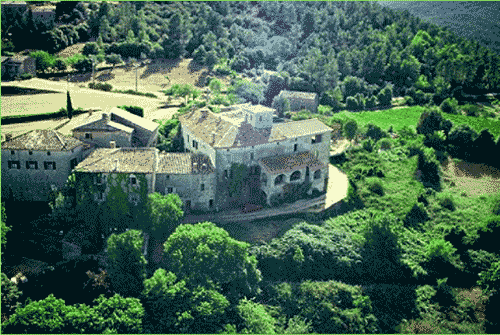
I go to the Cévennes Mountains of France, where Kent has a little château in a mountaintop hamlet. Called Le Mazel, the house is an eerie and magical place, and its previous owner, a Swedish actress and film director named Mai Zetterling, still makes her presence known here even though she’s been dead for a few years.

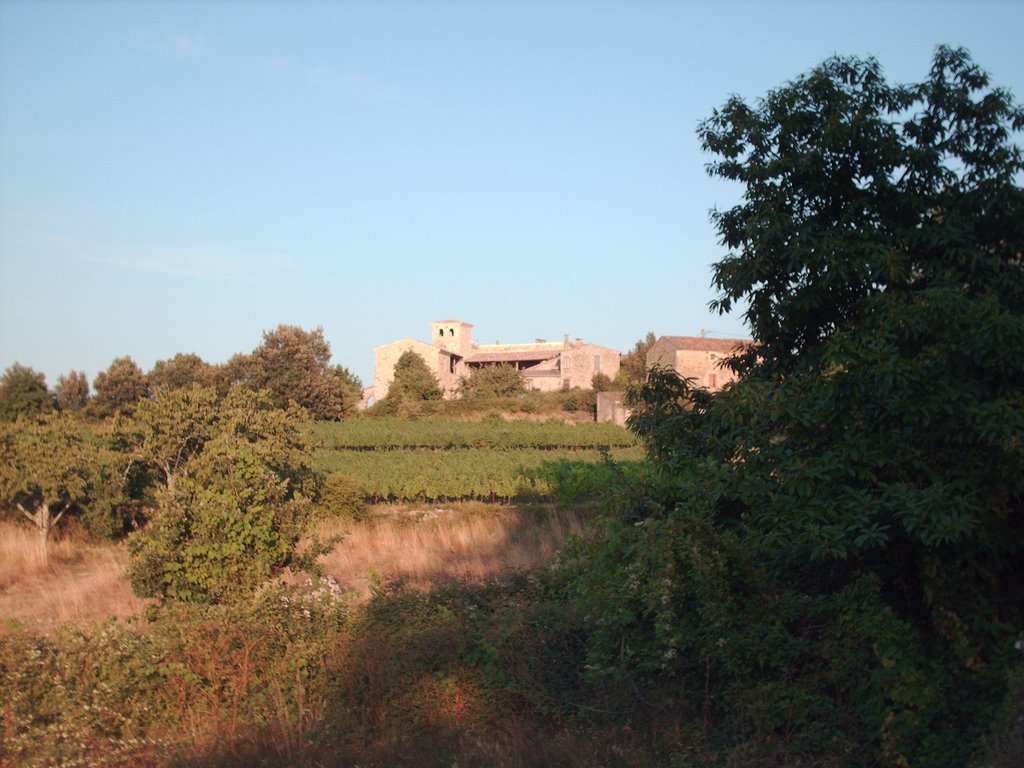
Le Mazel is a house of many rooms built in the 1840s by a coal mine owner, but the mine shut down long ago, and the remote region of les Cévennes is now home to local montagnards, French hippies and a few passing Dutch and Parisian tourists. To get to the house, you have to travel up a winding, pine-needle-covered dirt road that seems to go on forever. It’s so beautiful and secluded that the first night I arrive at Le Mazel, when the warm wind is gently caressing the house’s stone walls and the interior is filled with candlelight, I can’t believe how lucky I am to be spending the whole summer here.

Most days at Le Mazel, it’s just me and two painters rattling around in our newly founded art colony, where we live in squalid splendor among the remains of Mai’s estate. Painter No. 1 is Bella, a longtime girlfriend of mine, and painter No. 2 is Erik, a friendly young Texan recently graduated from art school. Bella likes to travel and her boyfriend is French, so I invited her to join me here when Kent said he was looking for artists. Bella knows me so well—sometimes too well—but her presence at Le Mazel is tremendously comforting. Erik is the mystery card, but he’s young and fun and eager to learn French, so he adds life to our little party.

Mai left Le Mazel in a hurry in 1994, when she took what she thought would be a quick trip to London for treatment of cancer, but she never returned. Everything she owned—a pack of cheroots on the table, her fur coat on a chair, the table, the chair, everything—stayed in the house until Kent bought it in 1999. I’m sure her spirit resides at Le Mazel, especially since she’s buried beneath a tree in a field next to the house.

I spend the summer of 2000 cooking and eating in Mai’s kitchen, breaking more than a few of her wineglasses, writing on her desk, bathing in her enormous tub and sleeping in her bed. I can see from all the photos she left behind that Mai was a classically beautiful Scandinavian ice princess, and yet her autobiography and the short stories she wrote as well as the books in her library show that she was a classically feminist nonconformist.

She was a “wild child” as a girl, she says, eager to escape the numbing poverty and intellectual emptiness of her hometown in Sweden. Considering my own Scandinavian roots, Mai’s story fascinates me, and I feel like I have a personal connection to her thanks to our shared genetic history. I love to look at her face.

“Bella! Come here! Look at this picture of Mai I just found. Isn’t she beautiful?”

“Gorgeous. They just don’t make actresses like that anymore, do they?”

“I wish I could look so glamorous. Did I tell you about my theory that Mai and I are actually related, that she’s a long-lost member of my Swedish tribe, and that my grandmother and her mother were cousins?”

“Fascinating, Joycie. Your mind works in such mysterious ways.”

Early in her career, Mai showed great talent and starred in an Ingmar Bergman film, Music in the Dark, before moving on to a solid film career in Britain, where she acted in and directed a number of movies. Briefly in the 1950s she went to Hollywood, where she had a big love affair with Tyrone Power, but she made only one movie there because she couldn’t stomach the artificiality of the place. Her co-star, Danny Kaye, called her “refreshingly different from my usual leading ladies,” and it’s this refusal to fit in that adds to Mai’s appeal for me.

“Oh, that Mai,” I say, chuckling appreciatively, as I read select passages of her autobiography to Bella. “She really was the black sheep of the family.”

Also judging from the photos, Mai went from being a glamorous film star to a proud, independent woman who cared less and less about society and its expectations as she grew old in the Cévennes. And again, there’s that family connection—Mai looked a lot like my Swedish-born Aunt Helga in the later stages of her life. Spooky. “I have been a child, a girl, a party doll, a mistress, a wife, a mother, a professional woman, a virgin and a grandmother,” Mai wrote in 1985. “I have been a woman for more than fifty years and yet I have never been able to discover precisely what it is I am, how real I am.”

Despite Mai’s quest for authenticity, she never seemed to attain that goal because she dreamed so big. Having met her son, her ex-husband and her ex-lover, Kent has all kinds of stories about what Mai was actually like: hard on herself as well as the people around her. Mai herself admits as much in her autobiography, several copies of which are lying around Le Mazel, which Mai describes in a 1981 journal entry as “my home: a ramshackle castle, perched on an iron rock.”

Everybody who stays at the house enjoys gossiping about Mai as if she were still alive. And when we talk about my Bad Girls Project, people point out that Mai herself was a bad girl. During long, wine-drenched parties, we scare ourselves by summoning the spirit of Mai to join us at the dinner table. Erik is convinced that he’s seen Mai’s ghost, and he starts to wear her hat, robe and crystal amulet.

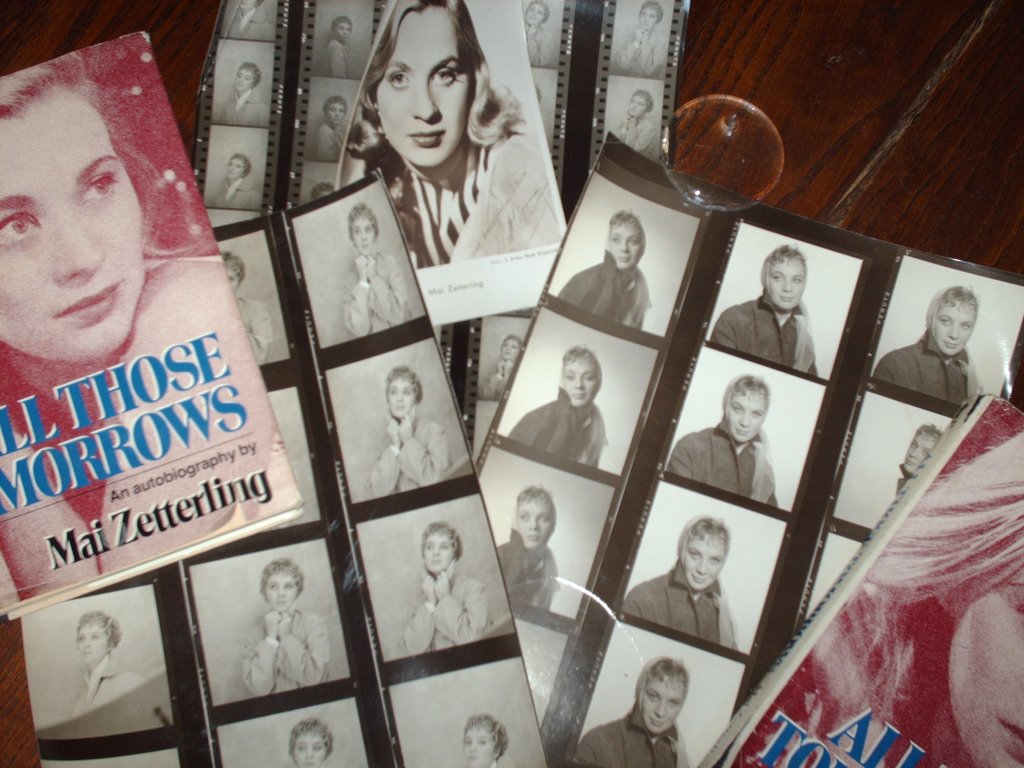
Mai’s presence here is strong. There’s no television, phone or computer at the house, and when I’m seeking a little entertainment, I paw through her office papers, steal the books off her shelves and snoop through her film stills and family snapshots. The more I see and read, the more I understand everybody’s point about Mai being a bad girl.

And yet I’m living under her roof and gazing at the same mountain views she saw when she lived at Le Mazel. For the first time since my studies began, I understand that bad girls were flesh-and-blood human beings whose joys and struggles were real. Maybe Mai was tough to be around, but she was so full of love that it overwhelmed her sometimes. I recognize her Scandinavian stoicism and craving for solitude, and there’s plenty of room for both here in this French villa, especially at night when all the guests have gone away.

And yet, daylight does follow. On summer mornings Le Mazel is filled with flowers. Like me, Mai had a feeling for flowers. “A large pink camellia is in flower in a bright terracotta pot; the red of the sun makes the petals shiver,” she wrote shortly after the end of her final marriage. “The first swallows have arrived and whiz past me with excited shrieks. I join them in their excitement and shout to the sky: ‘I have survived, survived, survived.’”

Thursday, July 06, 2006

A Visit to Mai Z.'s Ghost

And now I've returned from Le Mazel, my cousin Kent's French villa in the Cevennes mountains where I spent my summer of love 2000. This time, I went with a purpose: to reacquaint myself with Mai Zetterling, the previous owner of Le Mazel. Kent and I and a group of friends formed an art colony at Le Mazel for that one brief season in 2000, and during that time we all thought about Mai Z. a lot because she died in 1994 and all her belongings remained virtually untouched for five years. She was a bit of a bad girl, and her children, ex-husbands and former lovers weren't interested in going through her affairs and settling her estate after her death.

In 1994, Mai traveled to Britain for treatment of the cancer she was battling, expecting to return a week later, but she never made it back home. In 1999, when Kent bought Le Mazel, he found a shopping list in the kitchen, a half-written letter in her cluttered office, a fur coat draped across a chair, dishes in the cabinet, a library full of books, a houseful of furniture--in short, she left behind her entire life in that house, and it remained there untouched for years, like some poor soul put under a witch's spell in a fairytale.

This is where the art colony lived for three months, among Mai's belongings, and we frequently invoked her spirit during that summer of love, making toasts to her at dinner on the terrace, speculating about her love life, and visiting her grave in a field below the house.


Mai Zetterling, born in 1925, was a famous Swedish actress who made a number of movies in Britain and just one in Hollywood (she hated the American film industry's phoniness and greed) before becoming a film director in the 1960s. She was a beautiful, passionate, headstrong woman who in her lifetime had two husbands, a string of lovers including the Hollywood star Tyrone Power, two children, and twelve abortions. It's easy to learn about Mai's secrets--all you have to do is read her autobiography, All Those Tomorrows.


I read Mai's autobiography at Le Mazel last week on a sentimental journey to my own past, the summer of love 2000 when I reinvented myself as a bad girls writer and hopeful free spirit, ready for adventure and a life full of art, happiness and satisfaction. It was three months of paradise, really, living in the mountains in France and waking up every day with a sense of peace and joy. These good feelings came close on the heels of the worst period of my life, when I had no home, no job, no money, no man, so my sense of wonder in arriving at a place like Le Mazel was especially strong.

Now, six years later, I have a life back--I returned to Le Mazel for a summer holiday with my new husband, having left behind only briefly my office job in Manhattan and my two-bedroom coop apartment in Brooklyn.

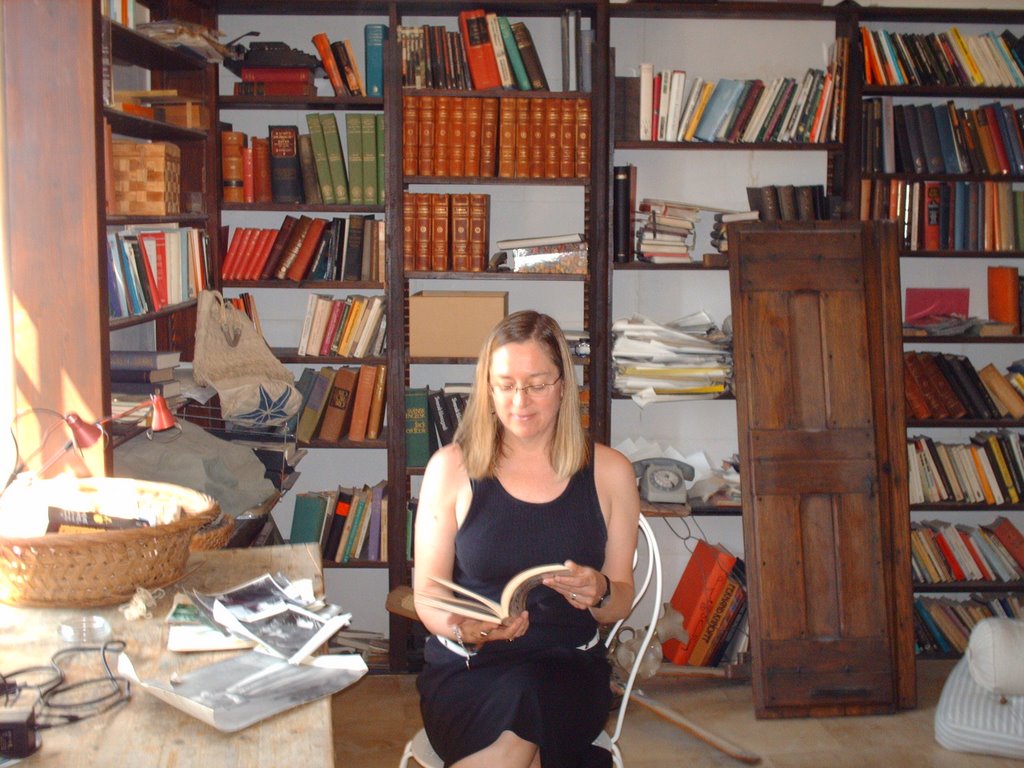
My own sense of stability gave me the space during this visit to study Mai as a subject for my book. I held meetings with Mai in her office as I read her books, went through her papers and looked at her pictures:


I communed with Mai's spirit as I bathed in her tub:


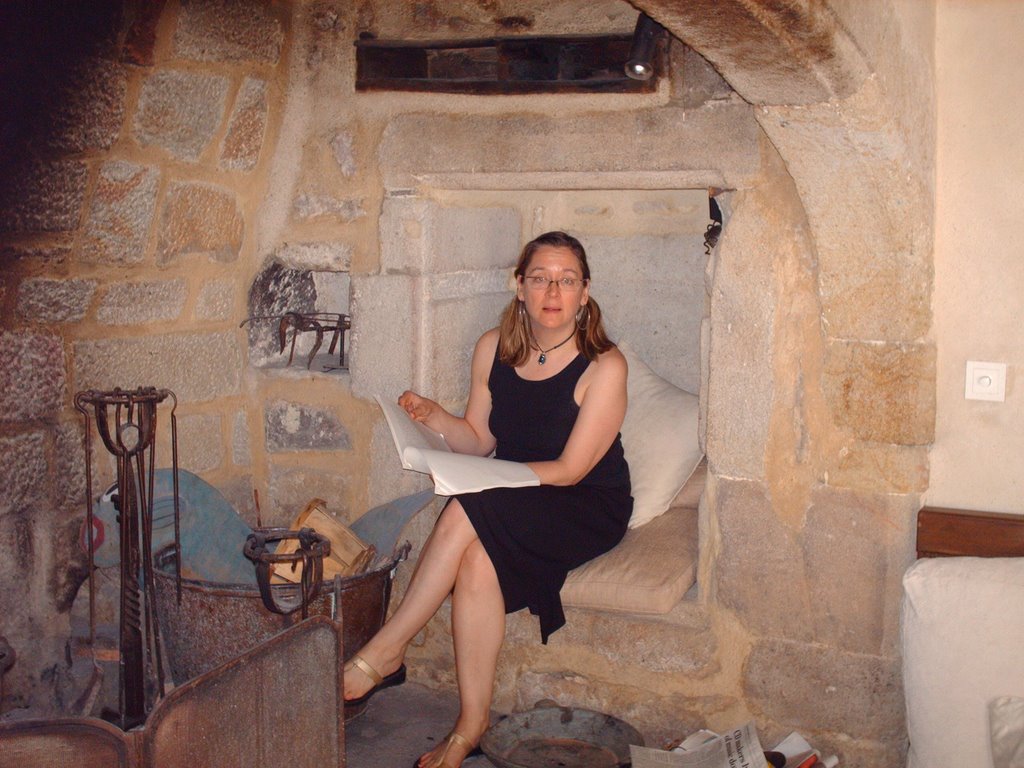
I read the original typed manuscript of All Those Tomorrows in Mai's fireplace:


I felt the spirit of Mai's ghost all around me at Le Mazel. Le Mazel is the sort of place that seeps into your skin. So much of what I remembered about it from six years ago is its physicality. The wind at night, the sound of my bare feet padding along the stone floors, the smell of the furniture. On this brief visit, I wrote feverishly in my journal every day. One morning, I wrote: "I slept poorly in paradise last night. Why can't I sleep in paradise? I left Dave [Note from Joyce: he's my husband, the man I haven't written about yet] to lie in my old bed in the corner studio where I used to sleep, next to my writing table. I lay there, reading Mai's memoir, feeling cozy with the mosquito netting pulled round the bed, and I read until I finally drifted off. An hour or two later I awoke suddenly from the cold and ran back to Dave's warmth in the faded light of dawn. Just like before, I half-feared, half-desired coming across Mai's ghost in the long hallway. So childish. And yet why not? If there is such a thing as ghosts, Mai would be here and I would meet her in the stone hallway late at night when I thought I was alone."

Mai, too, thought she might become a ghost. In a journal entry dated March 10th 1981, written at "Le Mazel, my home: a ramshackle castle, perched on an iron rock," Mai said: "Twilight all of a sudden. The sun has made streaky patterns everywhere. Soon the fog will whirl itself up the little hill and envelop me, and I shall become a ghost figure on my terrace."

At the end of her life, when her husbands, lovers and children had all left her, Mai lived all alone at Le Mazel. I can think of worse fates.


Next time, I'll talk about a slice of life in Brooklyn. Cheerio, Joyce Hanson

Wednesday, June 21, 2006

Away to France

Dear Reader,

On Monday, I'm returning to Le Mazel:


It's the hamlet in the Cevennes mountains of France where I first came to know Mai Zetterling, a beautiful Swedish film actress who starred in a lot of British movies during the 1950s and 1960s:


Mai lived at Le Mazel until her death in 1994. The house stayed empty for five years until my cousin bought it, and when he took over, the place was still very much intact. Mai had left the place in a hurry because she thought she'd just be taking a quick trip to London for treatment of her cancer. She never made it back to France.

I lived at Le Mazel for three months in 2000, during my summer of love when I reinvented myself with the help of my bad girls. Needless to say, the spirit of Mai Zetterling was all around me then--I wore her hat, slept in her beds, sat in her chairs, ate off her plates, broke her wineglasses, read her books, and snooped through boxes of film stills and family snapshots in her office.

It's been several years now since I've visited Le Mazel, and I wonder how it will feel to go back there. I'll tell you more after my return to NYC on July 4. There will be no blog posts while I'm away. Part of Le Mazel's charm is that we have no computer, no phone, no television.

Cheers, Joyce Hanson